
By Henry
“Players now had a part in controlling their luck.”
Welcome to the Game Giant Blog, by Henry, the the resident enthusiast on board game, card games, dice games, tabletop RPGs, and other games that require neither a screen nor a sweat. This blog covers exciting new games, golden classics and everything in between, as well as events in the store and the greater world of board gaming. This week: Roll and Write to victory!
As long as people have been playing games, dice have been a critical component. Dice are integral to gambling as well as many classic games, from roll-and-move games like Monopoly and Sorry, to war games like Axis & Allies, Risk, or Warhammer. For most of gaming history, dice have been an element of chance out of player’s control; they can guess what may be rolled, but they can’t control it. In 1956 the toy company Milton-Bradley published a game change this thinking in a dramatic way and open up new avenues of game design: Yahtzee.
Yahtzee was a take on the traditional gambling game of “Poker Dice”, where players rolled dice to create hands instead of draw cards. The groundbreaking innovation that Yahtzee added to gaming was the score-card. Players could choose which dice to score points from and which to re-roll in the hopes of improving their hand. Players now had a part in controlling their luck. Each roll presented an important choice: score the points or hope for more? This results in the cruel conundrum that every time a player faces a poor situation it is entirely their own fault. The puzzle of filling up score sheets based on dice roles would grow into a new genre of dice game: the roll-and-write.
It would be several decades before the potential of the roll-and-write would be realized. There were several Yahtzee copycats, but the true story, perhaps unsurprisingly, lies with Catan. In 2007 Klaus Teuber and Mayfair Games published the Catan Dice Game, a sequel to the world-shaking hit Settlers of Catan, the most influential game of the last 50 years. The Catan Dice Game introduced the roll-and-write to the European theory of game design and the next 10 years saw an explosion in the category, with notable additions such Roll for it, Quixx, Castles of Burgundy Dice Game, Roll Through The Ages, and Mr. Meeseeks Box o’ Fun (a Rick and Morty game).
2018 saw the introduction of two of the best roll-and-write games yet: Welcome To… and Railroad Ink, both of which add surprising mechanics to the genre. Both of these games speed up play with simultaneous turns and are made to be easy to teach to new players
Welcome To… has players designing the perfect suburb and ditches dice in favor of cards that are flipped over each turn, allowing players to plan for the future with greater certainty. Welcome To… has the joy of numbering houses, circling pools, and drawing fences on your score sheet, combined with the pressure of watching your friends complete housing plans before you.
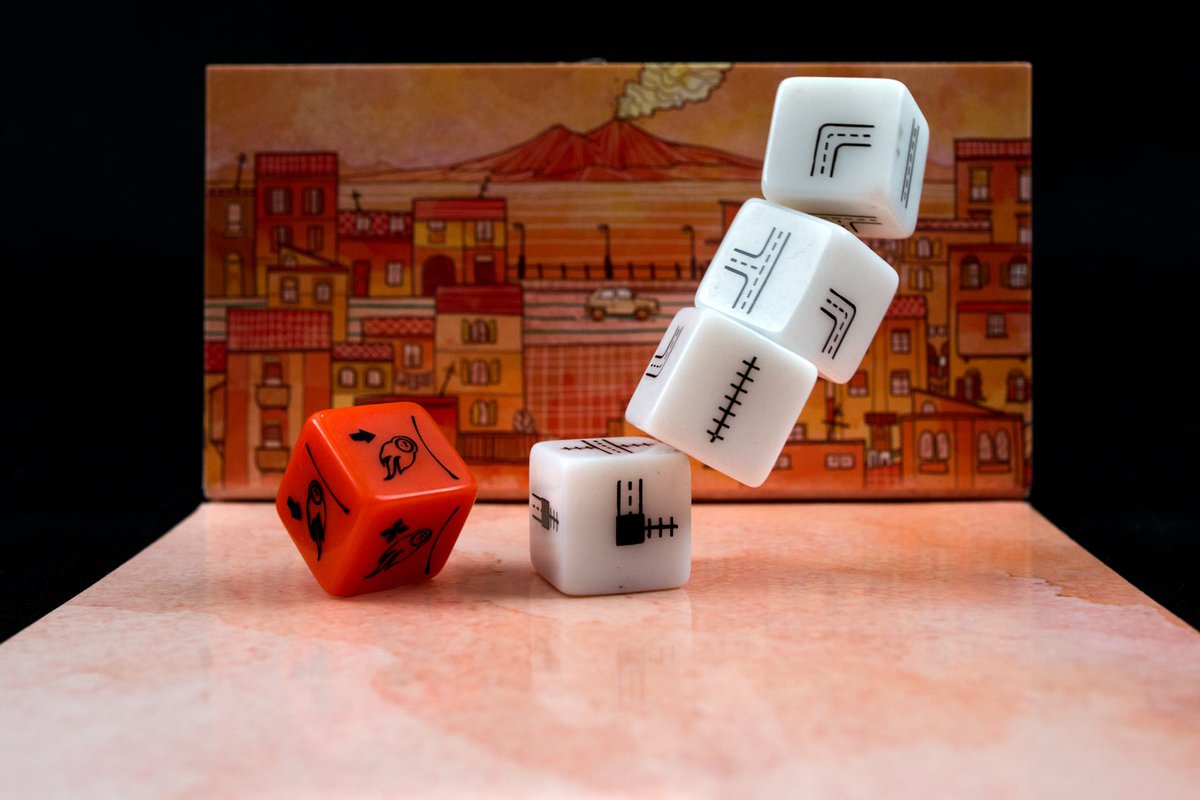
Railroad Ink was the other fantastic roll-and-write game of yesteryear . In it, players roll dice with railroads and train-tracks on them and draw the faces shown on their boards. Players must plan how routes will connect to minimize dead ends and build the best network. The game is remarkable for having a five-minute teaching time, but presenting some baffling puzzles. The game has two editions: Blazing Red adds meteors and volcanoes, and Deep Blue has lakes and rivers. The editions can be combined so twelve players can play. Railroad Ink has become this blogger’s standard “bring to the brewery” game.
Roll-and-write game reward planning and timing but are universally easy to learn. Starting with the simple but revolutionary design of Yahtzee and spread by the Catan Dice Game, this category of game is set to continue expanding into 2019 and beyond. Try your hand with Railroad Ink, Welcome To…, or any number of fantastic games in this category!
 Game Giant's Blog